
Recognizing and Treating Repetitive Strain Injuries
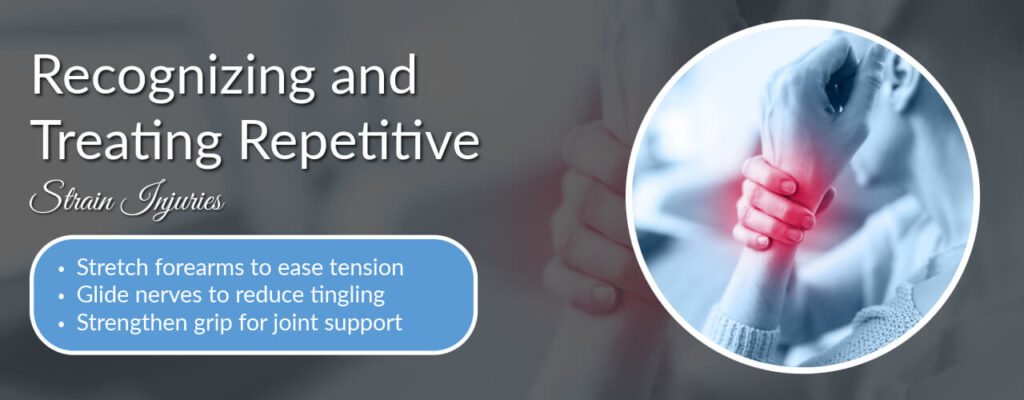
If you notice discomfort that worsens after repeating the same motions at work, home, or during workouts, you might be dealing with repetitive strain injuries. These injuries develop gradually and often go unnoticed until they interfere with your ability to move comfortably. Whether it is wrist pain from typing, shoulder stiffness from lifting, or elbow tension from frequent tool use, these conditions respond well to early treatment and physical therapy.
At [site-name], we help patients understand the cause of their symptoms and provide hands-on support to relieve pain, restore strength, and prevent recurrence.
What Are Repetitive Strain Injuries?
Repetitive strain injuries (RSIs) are soft tissue injuries caused by repeated use, awkward posture, or overuse of a muscle or joint. Common types of RSIs include:
- Carpal tunnel syndrome
- Tennis or golfer’s elbow
- Rotator cuff tendonitis
- De Quervain’s tenosynovitis
- Trigger finger
- Bursitis
Symptoms of RSIs
- Dull or aching pain in the affected area
- Stiffness or limited range of motion
- Tingling or numbness
- Muscle weakness or fatigue
- Discomfort that improves with rest and returns with activity
These symptoms typically start small but may grow worse over time if the cause is not addressed.
How Physical Therapy Helps Manage Repetitive Strain Injuries
Physical therapy offers non-invasive, evidence-based solutions to address RSIs. At [site-name], we begin with a thorough assessment to identify movement patterns, muscle imbalances, and activity-related habits that contribute to the issue. We then create a personalized plan that helps you recover and stay active with less discomfort.
Here is a step-by-step guide to recognizing and treating repetitive strain injuries using strategies that can be applied with the help of a licensed physical therapist.
Step 1: Listen to Early Warning Signs
Pain that builds over time is often a sign that something is off in your daily movements. Ignoring symptoms or pushing through pain can lead to more severe inflammation or tissue damage.
What To Do
Pay attention to any discomfort during specific tasks like typing, lifting, or gripping. If the pain repeats in a pattern or intensifies with use, schedule a physical therapy evaluation.
Step 2: Identify the Cause of the Strain
Repetitive strain is usually the result of poor ergonomics, overuse, or movement inefficiency.
What To Do
With the help of your therapist, review your posture, workspace setup, and techniques during repetitive activities. Small changes, such as adjusting wrist position or taking frequent breaks, can significantly reduce stress on the body.
Step 3: Reduce Aggravating Movements
While complete rest is not always necessary, modifying your activity can help reduce strain and promote healing.
What To Do
Avoid high-repetition tasks when symptoms flare up. Use supportive braces or ergonomic tools when needed. Your therapist can help you modify tasks and recommend movement substitutions that are safer.
Step 4: Begin Targeted Stretching and Mobility Work
Tight muscles and restricted joints often contribute to RSIs by placing extra load on tendons and nerves.
What To Do
Incorporate gentle stretches for the neck, shoulders, forearms, and hands. Your therapist will guide you through specific stretches that target your injury and improve joint mobility.
Step 5: Strengthen the Supporting Muscles
Weak muscles can force the body to compensate in unhealthy ways, increasing the risk of overuse.
What To Do
Perform strengthening exercises to build endurance in the stabilizing muscles. This may include wrist extension exercises, grip strengthening, scapular stabilization, or postural muscle training depending on the injury location.
Step 6: Rebuild Healthy Movement Patterns
Once the pain subsides, it is important to reintroduce movements gradually and with proper form.
What To Do
Your therapist will help you re-learn specific tasks using optimal biomechanics. This training prevents the injury from recurring and helps you return to work, sports, or hobbies safely.
Step 7: Create a Long-Term Prevention Plan
Sustainable relief from repetitive strain injuries requires long-term attention to posture, strength, and activity management.
What To Do
Set a reminder to take stretch breaks every hour. Vary your tasks throughout the day to avoid prolonged repetition. Continue performing your home exercise program as directed. Periodic check-ins with your therapist can help track progress and make adjustments as needed.
Let [site-name] Help You Take the Next Step
If you are dealing with pain or fatigue from repetitive tasks, you do not have to wait for things to get worse. Repetitive strain injuries respond best to early intervention and personalized care. Contact [site-name] today to schedule your evaluation and start building a plan for lasting relief. Our team is ready to help you move better and feel stronger every day.